
Can AI Predict Violence?
Clip: 10/27/2026 | 2m 52sVideo has Closed Captions
A protest. An AI prediction. Should officials trust a machine to stop violence before it starts?
In a hypothetical scenario, civic leaders are offered an experimental AI tool that promises to identify individuals most likely to spark violence at an upcoming protest. Should they use it? The debate pits security against privacy and civil liberties, raising urgent questions about bias, trust, surveillance, and how much power society should give AI.
Problems playing video? | Closed Captioning Feedback
Problems playing video? | Closed Captioning Feedback
Funding for this program was provided in part by grants from The Rosalind P. Walter Foundation and by a grant from Anne Ray Foundation and by contributions from viewers like you. Thank you. Location furnished by The New York Historical.
Can AI Predict Violence?
Clip: 10/27/2026 | 2m 52sVideo has Closed Captions
In a hypothetical scenario, civic leaders are offered an experimental AI tool that promises to identify individuals most likely to spark violence at an upcoming protest. Should they use it? The debate pits security against privacy and civil liberties, raising urgent questions about bias, trust, surveillance, and how much power society should give AI.
Problems playing video? | Closed Captioning Feedback
Where to Watch Breaking the Deadlock
Breaking the Deadlock is available to stream on pbs.org and the PBS app.
Buy Now
Providing Support for PBS.org
Learn Moreabout PBS online sponsorshipThe data center protest is now 2 days away.
Mayor Jones, you received credible reports that violence might break out at this protest.
Hawk Safety, the company that helped us recover our stolen gun, has given Betterton access to a beta version of its newest tool, Hawk AI.
Hawk AI can generate confidential reports of suspicious individuals using AI analysis of public records, commercial databases, criminal history, camera feeds, social media feeds.
So your police chief says, Mayor Jones, I think we should use Hawk AI to produce just 2 or 3 reports of the most high-risk individuals who could cause terrible violence at this protest.
Are you interested?
Uh, not interested in beta versions.
We need things that have been tried and tested, our lawyers are comfortable with, et cetera.
Especially something like this.
I think we've got sufficient personnel and drone surveillance to be able to handle it adequately.
So you're a no, you don't want this?
Not the beta version, no.
In my world, you do everything you can to prevent and protect if you can.
You basically use the technology that you have to be able to identify people that might be of a high risk or high volatility, and you try to intervene with that before it happens.
When you have that many people on the street, you got a mob mentality.
someone's looking... Without understanding the actual benefit of it and not understanding the guardrails that they're gonna put in place with the information that they're going to collect.
We don't know what that is.
They haven't shared that with us.
And unfortunately, in 48 hours... we don't have enough time to run that through.
Well, I have to say that basically you've identified the people that— 2 or 3 people who are basically the leaders of this.
I'm gonna bring them down, sit them down, say, okay, where are we going from here?
Isn't that theoretically what police have done?
But with 48 hours though, this is not the time to be trying new things, especially if it's— there's sufficient ability of police officers and... I'll take 48 minutes if I can get it to stop something bad.
That sounds like the movie Minority Report though.
I mean, in the old Soviet Union, they used to also bring people in because Somehow the KGB had said that they were ringleaders, but we have civil liberties for a reason.
Listen, I think over the last, you know, 200 years, 250 years of America, we have biased our justice system against a certain group of people.
AI is a tool.
Program that tool with people that still have inherent bias, the minorities are going to be the ones that are targeted.
And so I think you have to be very, very careful.
You're in such dangerous territory, and 48 hours isn't enough.
I would agree with the— You agree with the mayor?
With the mayor.
I wanna give Sarah Nelson— sorry.
Let me just say, like, the trust piece is so important.
There's this idea, like, well, it could do this, it could do that.
Well, it could also, if it doesn't work well, break people's trust further and make it harder for us to actually employ smart technologies that are trusted and tested.
If you can intervene at any time, you can intervene.
48 seconds, 48 minutes, 48 hours, 48 days, whatever you can do, you take.
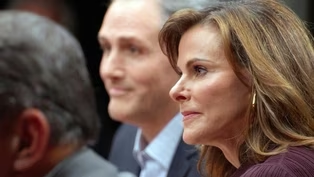 New
Video has Closed Captions
The future is coming fast. Can society shape AI before AI shapes society? (4m 19s)
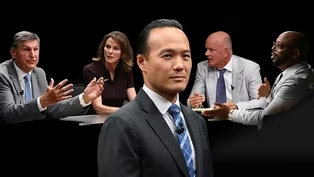
Breaking the Deadlock: AI: Who's In Control?
Video has Closed Captions
As AI advances, who will control whom: people or technology? (30s)
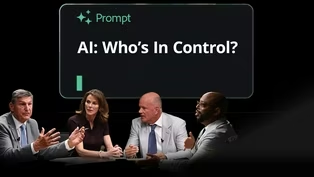
Breaking the Deadlock: AI: Who’s In Control? — Open
Video has Closed Captions
The AI revolution is here. Who benefits, who loses, and who decides? (1m 3s)
Providing Support for PBS.org
Learn Moreabout PBS online sponsorship New Episode
- News and Public Affairs

Top journalists deliver compelling original analysis of the hour's headlines.

- News and Public Affairs

FRONTLINE is investigative journalism that questions, explains and changes our world.
 New Episode
 New Episode
 New Episode
 New Episode
 New Episode

 New Episode
 New Episode

 New Episode


Support for PBS provided by:
Funding for this program was provided in part by grants from The Rosalind P. Walter Foundation and by a grant from Anne Ray Foundation and by contributions from viewers like you. Thank you. Location furnished by The New York Historical.