John McGivern’s Main Streets
Lanesboro, Minnesota
Season 5 Episode 8 | 26m 48sVideo has Closed Captions
Lanesboro, Minnesota, sits in bluff country and earns its “most charming” reputation.
Lanesboro, Minnesota, lies in scenic bluff country and lives up to its reputation as one of the Midwest’s most charming towns. It’s known for top-notch trout fishing, a thriving Amish community, live theater, great food and inviting places to stay. It’s also home to a livestock Sales Commission — the first John and Emmy have ever experienced!
Problems playing video? | Closed Captioning Feedback
Problems playing video? | Closed Captioning Feedback
John McGivern’s Main Streets is a local public television program presented by PBS Wisconsin
John McGivern’s Main Streets
Lanesboro, Minnesota
Season 5 Episode 8 | 26m 48sVideo has Closed Captions
Lanesboro, Minnesota, lies in scenic bluff country and lives up to its reputation as one of the Midwest’s most charming towns. It’s known for top-notch trout fishing, a thriving Amish community, live theater, great food and inviting places to stay. It’s also home to a livestock Sales Commission — the first John and Emmy have ever experienced!
Problems playing video? | Closed Captioning Feedback
How to Watch John McGivern’s Main Streets
John McGivern’s Main Streets is available to stream on pbs.org and the free PBS App, available on iPhone, Apple TV, Android TV, Android smartphones, Amazon Fire TV, Amazon Fire Tablet, Roku, Samsung Smart TV, and Vizio.
Providing Support for PBS.org
Learn Moreabout PBS online sponsorship- John McGivern: I am in Minnesota, the land of 10,000 lakes.
But in this city, in this county, there are none.
[playful music] - Announcer: Thanks to our underwriters.
- There's no place like Oconomowoc.
Explore, play, shop, stay!
Visit Oconomowoc!
- Announcer: Together, doing good for 130 years.
Horicon Bank: It's the natural choice for community banking.
- My father taught me that to make great bakery, you have to do it the right way.
O&H Danish Bakery, where kringle traditions begin.
- Support for this program provided by Plum Media.
Elevating conferences and meetings with smooth, stress-free production.
- Announcer: Financial support has been provided by our friends at Greenfire, a construction management company, the Friends of PBS Wisconsin, and the Friends of Main Streets.
- Announcer 2: Have you listened to our podcasts?
John, Emmy, and the producers talk about what happened behind the scenes and share their favorite things about each community.
Main Streets continues on your favorite podcast platform.
♪ 'Cause these are our Main Streets ♪ ♪ Something 'bout a hometown speaks to me ♪ ♪ There's nowhere else I'd rather be ♪ ♪ The heart and soul of community's right here ♪ ♪ On these Main Streets ♪ - I am in Lanesboro, Minnesota, a small city with a population of just about 800 people in Fillmore County.
It's in an area that they call Bluff Country in the southeastern part of the state.
Lanesboro is about 40 miles southeast of Rochester.
It's an hour west of La Crosse, Wisconsin.
It is really close to the Iowa border, and it sits on the banks of the Root River.
This is beautiful Lanesboro.
Emmy, the Root River is at the root of Lanesboro's story, but not enough to call it Rootsboro.
So, how did Lanesboro get its name?
- Emmy Fink: Well, because there was a gentleman named F.A.
Lane.
He was a prominent business owner, landowner, and he helped to found the city.
In fact, the city really thrived because of the location on the river and then eventually the rail line, because everybody came here looking for jobs.
- John: River and railroad, a story we hear a lot.
When did the R&R boom end?
- About 100 years after it started, 1970s, everything shut down.
And that's when everyone and everything left this beautiful town.
- So, how did this ghost town turn into a tourist destination?
- Well, it all came back to the railroad because they decided to pave the rail line, make it into the Root River State Trail, giving people an option to bike and hike and utilize what was into something new.
- Quite the transformation.
And how did they fill up all these buildings?
- Emmy: Well, all the creative people moved into town.
So, you know, there's the theaters, there's the galleries, the shops.
Artists came, they found inspiration.
They collaborated.
They didn't leave.
- We're gonna check it out.
This is what we have to do... - Where are we gonna go first?
- We're gonna check it all out.
- Peter Ruen: This is 800 million years.
That's how old these rocks are.
[calls goats] Imagine having this in your backyard, and you gotta walk up and down this with your chainsaw.
It's like mowing your lawn.
- John: Yeah.
- Peter: Goats, obviously, are made for this.
- John: It's called the Driftless Goat Company.
How did you get into goats, Peter?
- Well, I had two children and a mortgage.
- Oh, [laughs] is that right?
That's a good answer.
- And I had a really good neighbor who presented me with an opportunity to build a company.
- John: Okay.
- Peter: We were both interested in managing our land here.
I had recently moved here from New York City.
There's a lot of challenge to maintaining this type of environment.
- John: Yeah.
- There's no millions of buffalo running around to take care of the prairie.
We have to take care of it, right, if we're gonna, if we care about it.
So, the goats are a tool, an alternative.
Maybe you don't wanna spray, right?
Maybe you don't wanna take your chainsaw on your cliff.
- John: Okay.
- Peter: It's so much nicer to have the goats eat them.
Hey, Billy!
- John: You rent your goats?
- Peter: Yeah, we rent them.
They take care of the thistles.
They take care of the wild parsnip.
They take care of the invasives.
And then they also breathe more light, nutrients into the soil.
I have 40 to 50 that I run all summer.
And we have a network of farmers at this point.
It can be a really effective land management tool, and that's what people are into.
- John: You also have a store in Lanesboro, don't you?
- Peter: Me and my wife opened the Lanesboro Market, which is a small grocery store in Lanesboro.
- Cynthia Ruen: The milk from Chatfield.
- John: Local?
- Cynthia: Yeah.
- Peter: Lanesboro was without a small grocery store for about two years.
- So, what did the Lanesboro population do?
- Well, we had to drive to other towns to buy food, mm-hmm.
- Peter: You know, we have 230,000 visitors to Lanesboro every year, is kind of the estimate, right?
So, the grocery store, I've learned, is not just about food.
It's about having a door open.
- John: Yeah.
- Peter: Having a place where people know they can come and ask a question, whether they're from here or not.
- And what a building this is!
- Cynthia: Beautiful.
The best, in the middle of the town.
Huge windows.
- John: Yeah.
- You can see everything, yeah.
- Do you know when this building was built?
- 1875?
- When was it built?
- Peter: 1875.
- 1875.
[both laugh] - John: And how many people do you have working here?
- Cynthia: Me and my husband and my daughter sometimes.
- John: Do you need to hire a part-time guy?
- Yes, you are hired right now.
[both laugh] - "You are hired," she says.
What shift do you need me?
[both laugh] Congratulations on this business.
All-important to this community.
- Cynthia: Absolutely.
- John: Yeah.
The storytelling phone booth in Lanesboro.
So, you push a number, one through nine, and you hear a real story by a real resident.
Yeah, how great is that?
So, I picked number nine, "The Turkey Bandit."
That's the story.
- Storyteller: The dog and the turkey.
It was Thanksgiving day.
- It reminds me of the party line we had growing up.
- Storyteller: He had a fully cooked turkey in his mouth.
- Here in Lanesboro, the main street is called Parkway Avenue.
And the best part is that the whole thing is walkable.
So, we're starting on this end.
This is Sylvan Brewing behind us.
Look at it, overlooks the bluffs.
It's in an old granary building.
This is the amaretto sour.
Oh, so refreshing!
I'm only one block in.
I got some ice cream, I saw the jewelry store.
There's the pub, there was some coffee.
Oh, some vintage clothes, an art gallery... And when you reach the edge of town, you have to stop into Juniper's.
Look at these views.
It overlooks the river right along the trail.
This is the pasta of the moment.
So good.
- John: Let's talk about what happens here.
We're at the Lanesboro Sales Commission.
- Joe Nelson: What we do is we sell livestock.
- Auctioneer: [calls] Get five on her... - Joe: For the folks with probably in a radius of 300 miles.
- John: 300 miles, livestock.
- Joe: Mostly cattle.
- John: Cattle.
- Joe: A few pigs.
- Auctioneer: 65 here, 75, 85.
Sold, 375, put 'em on 42-50.
- Joe: Goats, sheep, horses, whatever.
But our main gig is cattle.
- John: Yeah.
And what's going on right here that there's construction going on?
- We're standing in the old ring right here.
- It's a ring?
- Yeah.
Sales ring.
- 78 years it was here.
- 78 years?
- And we're really gonna get modern now.
This is called a ring scale, where the cattle will be weighed in here instead of out behind.
- So, the actual platform is the scale.
- Jim: That is the scale.
- John: Yeah.
Why would somebody come here to buy or to sell?
- Jim: A lot of the calves here today are born on dairy.
They bring 'em here, and then different farmers or ranchers or calf ranchers, they buy 'em up, and then they get 'em started, take 'em up to a heavier weight, and they might resell 'em again, or else they might take 'em all the way to finish.
- So, do you always sell here, or do you buy here as well?
- Nathan Bakke: Yeah, we buy here.
We buy a lot of the feeder calves.
Them 700-pounders, 500, give or take.
- John: And at one time, how many will you buy?
- Nathan: We bought anything from 15 to 80.
Just sold some little 130-pounders, 128-pounders.
Did very well.
- John: They did very well.
- Nathan: Did very well.
It's the best I've ever sold of little bottle calves.
- There they go, they're running.
- Jim: We've got a new herd bull.
Really, really pleased with the quality of the calves.
- And is it risky?
- Gabe Chase: Well, yes.
You know, you make these decisions, and it's many months and years, really, before we know if we made the right decision or not.
- Boss!
- John: Come on, boss!
They're like, "We don't know that voice," right?
- Jim: They're confused.
[John laughs] - How many are gonna go through here today at this auction on a Friday afternoon?
- Today, we'll get about 300 of them baby calves.
- John: 300 of the baby calves through.
- Jim: Had 500 last week.
- John: Do they all sell?
- Jim: Yeah.
- John: They all do.
- Jim: Yeah.
- John: And is this a year-round operation?
- Jim: Yeah.
- John: Goes all year.
How many days a week are they selling?
- Jim: Every Wednesday, every Friday.
And then we have two feeder sales starting in the fall on Monday.
- John: People can watch this online.
Can they bid online as well?
- Jim: Can bid online too.
It's on Cattle USA, so once you get established to be a buyer, you can hit the button.
- John: Yeah.
- So, if you wanna buy some cattle?
- Do I look like somebody who wants to buy some cattle?
- I think you should own some.
- Thank you.
Where would I put 'em in my condo in downtown Milwaukee?
[both laugh] [cows low] This produce, you either love or hate.
I happen to love it.
What tart-tasting plant is celebrated here every summer?
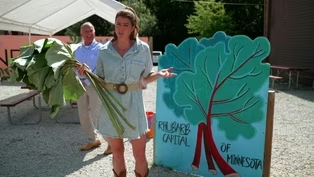
[playful music] - Well, thanks to my aunt and uncle growing this in their garden, and my Aunt Gigi's famous rhubarb dump cake, it is one I love.
Lanesboro, it's the rhubarb capital of Minnesota.
It's official and everything by the state legislature.
Now, here's the thing.
They're not the largest producers, so they must really like the vegetable.
And, yes, it is a vegetable.
Don't miss their Rhubarb Fest.
John, I see you back there!
[John laughs] - John: We're going on an Amish tour today.
You know the stuff, don't you?
- Mary Bell: I have had some experience with the Amish community, yes.
- You have.
- Yeah.
- John: And you're gonna allow us to experience their community today.
- Mary: Yes, exactly that-- experience their community.
And to get an understanding.
In 1974, the first Amish came here, and there were four families that came here from Pennsylvania.
Now, oftentimes people have impressions based on what they've seen on television or read.
And now, we're really getting into Amish territory.
You know, when you come across a buggy, you don't beep, slow down, give them room, and wait.
You're gonna meet a few Amish people, but you're not gonna be able to film them.
- John: Okay.
- And the reason for that, John, is that, in the Amish community, it's not about self, it's not about the individual.
And that goes to every single level in the Amish community.
It's why everybody dresses the same, so nobody's better than anybody else.
Nobody's house is better than anybody else's house.
Hey, John.
- John: Yes.
- Mary: You gotta try this.
What it is all about is the communities.
- John: And is Fillmore County a large population of Amish?
- Mary: It's the largest in the state.
- John: Largest in the state?
- Mary: Yes.
- John: And do we know what that population is?
- Mary: It's about 110 families, and that varies.
[goat bleats] - He's chattery, this one.
[goat bleats] Thanks for bringing us to the farm.
How's it going, Mr.
Farmer?
- Pretty good, pretty good.
We got a nice rain last night.
- John: As an Amish family on this property, is agriculture your business?
- Farmer: Not anymore.
Agriculture was the Amish income in business, but not today.
- And what is it mostly today?
- Farmer: Carpentering, woodworking.
- John: Yeah.
- Farmer: Housing, roofing.
- John: And why did it go from agriculture to building?
- Mary: They're very good in carpentry.
So, the more they did carpentry, the more carpentry was in demand.
And then, the other thing that happened is what's happening right now is tourism.
- It's part of the job.
- Mary: What we do at the tour is that we bring people not only to look at their stuff and buy their stuff, but to understand their community, to get a better understanding on a one-to-one basis.
- John: This is the Amish school?
- Mary: This is the Amish school, one-room school.
- So, there are a few Amish schools in the...?
- Mary: There are four.
They start at age 6, and they go to about age 14.
The number one thing that we've been told that they're taught is respect.
- John: Respect.
- Respect.
- We should all go to Amish school, then.
- Mary: We should all go to Amish school.
- John: Right?
- Mary: Yeah.
- John: Come on.
- Mary: Yeah.
- John: In a city of 800 people, there are two theaters right next to each other.
St.
Mane is the community theater.
Commonweal is the professional theater.
Two theaters in a city of 800.
My kind of city.
- This here is the Lanesboro stone dam, and it was built back in 1868.
It's one of the oldest arched dams left in the country, and there's only six of them, including the Hoover Dam.
Here's what makes them so special.
They use their curved shape and gravity to help control the water, and this one still generates electricity.
[gentle music] - Liz Bucheit: The pins actually became part of the regional folk dress, and the styles were specific to each area of Norway.
- John: Okay.
- You would be able to tell by the jewelry where someone was from, what their family name was, and if they were married or unmarried.
- John: By that.
- Liz: By that.
So, there's a lot of cultural memory and magic in one small object, which I continually find fascinating.
So, this is kind of ancient.
I'm using a piece of fine silver wire.
So, it's kind of like a herringbone sort of pattern.
I'm a filigree artist.
My background is in Norwegian filigree, and that's my specialty.
- John: And filigree is defined as what?
- Liz: It's the beautiful art of twisted wire that is formed and shaped into very delicate shapes, but then fused so that you get these wonderful, airy, light pieces of jewelry.
- John: How many pieces is this put together?
- Liz: About 30.
This particular technique, it takes a certain type of touch for it and many years of practice.
- Michael Seiler: So, I do a lot of lapidary work.
We're gonna take off the outer portion here.
It's a rainforest jasper from Australia.
- John: So, if somebody walks in and said, "Is there any way you can create..." whatever they want it, however they want it to hang on them, and you will then finish it for them?
- Michael: Absolutely.
We'll have people come in, and they'll say, "I met my partner at this place, and we had this experience."
And then, so, it's our job for Liz and I to take that and interpret it into something that's actually a functional, wearable design.
- John: How fun is that?
- Michael: It's friggin' awesome.
John: Really.
[both laugh] There's something so honoring and so compelling about your work around your ethnicity.
- Liz: Silver in Scandinavian culture serves three purposes, historically.
One is to show wealth.
One is to work as a curative thing.
But the third and the most important one is to protect you from trolls, elves, and the huldra folk.
- John: Oh, of course.
- Who are the invisible people that could come out and whisk you away into the mountain, and you would never be seen again.
So, a bride on her wedding day, she's very vulnerable from the time she leaves her house 'til the time she gets to the church.
They just load her up with as much silver as possible and then plop a crown on her head.
- John: You're famous for crowns, you really are.
- Liz: Because there is a crown tradition in Scandinavia for brides who wear a crown on their wedding day.
The crown that I have here in the shop... - John: Yeah.
- Liz: ...in keeping with the tradition, we rent it out to brides.
It's been in some parades.
It's been in approximately 13 weddings.
So, we've actually adorned quite a few people.
That should be on your Christmas card.
Everybody gotta feel like a queen once.
- Lanesboro isn't the wild, wild West, but it does have a cowboy connection.
How did Buffalo Bill leave his mark here in Lanesboro?
[playful music] - This is Buffalo Bill.
This is his friend Frank.
Now, the Lanesboro connection goes like this.
They met up in this city in the late 1880s, probably over a couple cocktails Is where they came up with the grand idea of Buffalo Bill's Wild West Show.
They put on the very first show here in Lanesboro before they took the show out on tour.
But the city still celebrates everything, all the history with Buffalo Bill Days every summer.
These two knew they had something good.
[upbeat music] - John: Do you mind if I grab one of these?
- Tiffany Ask: Go ahead.
- John: Okay.
Wow, they're heavy.
No, I'm kidding, okay.
You just thought, "That guy's an idiot," didn't you?
- Cory Strom: No.
- A little.
- No.
- So, this is it.
This is what you make.
- This is one of our pieces.
And this piece is actually-- Heavy panels will get placed against this, and this piece is used as a bumper so that the panels don't break or clash in movement.
- John: This is not a box factory.
- Tiffany: We are not.
We specialize mainly in kind of inside-the-box or exterior packaging protecting.
- Cory: Two separate sheets and a little bit of glue will turn it into a U-channel.
- Tiffany: We are definitely not a box factory.
- John: Do people presume it is?
- Tiffany: They do.
You think of packaging, and you think of the Amazon box that you get, and that's what it is.
Actually, there's a lot more to it than that, and that's kind of who we are.
- John: Yeah.
How did this business start?
You didn't start it?
- Tiffany: We did not.
Our grandpa started it in 1976 over in the Preston Fairgrounds.
Outgrew the fairgrounds and came to Lanesboro and started the business.
- John: And the fact that this business is right in the-- - Cory: Yep.
- Tiffany: You wouldn't think it was here.
- John: Right downtown.
- Tiffany: So, this is what it starts as.
- John: What?
- Liz: And then, you'll get an end piece of this.
And these protect the corners.
Being that we are small... - John: Can I help?
- Tiffany: ...we are able to offer different variety of and kind of being versatile on things.
- John: Yeah.
Pick it up a little!
- Cory: This order is for just under 2,600 of these.
- Tiffany: That's a typical order on these.
- John: Raw material-wise, how does this come?
- Tiffany: I think these are, like, 27x30 sheets that are laminated together or built up and then sawed down and then assembled from there.
- John: Is this a more expensive way to protect than styrofoam?
- Styrofoam can get expensive.
It can get hard for the end user to get rid of this type of material.
- Right.
- It can go in a baler.
It can go in your recyclable bin.
So, it is a lot easier to get rid of.
People are now even looking at instead of doing a wood pallet.
- John: Is it as strong as a-- - Tiffany: It is strong.
And then, again, you can recycle it.
And actually, when shipping, a corrugated pallet's a lot lighter, so then it's-- - John: You're gonna save money on shipping.
- Tiffany: You're gonna save money on your freight.
- John: Yeah, you guys are great.
Yeah, you are.
This area is the most popular trout fishing area in the state.
And in Lanesboro, trout fishing is huge.
That's where this place comes in.
It's the state fish hatchery.
It's the largest cold water production hatchery in the state.
It's a trout factory.
They build trout here.
And the work they do here really helps maintain and protect the trout population.
And you can see it all for yourselves.
Why?
Because they give tours.
Take a look.
They all grow up so fast, don't they?
[bright music] This shop is like a step back in time.
- Lance Prado: Yeah.
- John: It's very cool.
I love stepping into a world I know almost nothing about.
We're at the Root River Rod Company.
We're talking fly fishing.
- Yes.
- On the Root River, which is your backyard.
- Lance: It is, it's just a stone's throw away.
This will lay in the water like this, and trout will look up at it.
- John: It's more than just a rod and a reel, isn't it, fly fishing?
- Lance: You can grab hooks and make your own fly.
- John: Yeah.
- Lance: Fly fishing has a whole technique way different than just conventional fishing.
Basic fly reel is gonna be different than a conventional reel.
The fly line is thick and weighted, and that's how you cast your rod.
It loads the rod, and you can shoot these tiny little flies out to fool these trout.
Stand in that leg brace.
You gotta go back fast and forward fast.
- John: Okay.
You take people on... - Lance: Yep, we do guided trips.
That's our kind of bread and butter.
We do drift boats, and we kind of pioneered drift boat fly fishing in southeast Minnesota for trout.
- Oh, crap, here we go.
What is going on?
So, fly fishing on a boat, not in the waders in the water.
- Lance: Yes, correct.
In a boat, with just manpower, rowing, these drift boats only need about six inches of water fully loaded.
- John: Wow.
- Lance: And meant to hit rocks and waves and rapids and everything.
- John: Yeah.
- Lance: Pick it up.
We have brown trout and rainbow trout are the main species in the Root River here.
Some of these other streams have native brook trout.
[both laugh] A good fish.
We do well over a hundred trips a summer.
- John: You do?
- Lance: It's about a 50/50 shot of they either have experience or don't.
- My first fly fishing brown trout is what I got.
- Lance: They either heard about the Driftless Area is what we're in, and they wanna explore it.
And they either come from Montana, South Dakota, Chicago... - John: Destination, isn't it?
- Lance: Yeah, and they come here 'cause this is the Mecca, or they just come down here and had no clue that there was trout fishing and wanna try it.
Fly fishing is just gonna be technique.
It's something you don't force.
I've got a lot of patience and... - John: Oh, you do?
- Lance: Yeah.
And I've taken out a ton of people, so we can, we can definitely work with you and get you on a fish.
Nice.
There you go, let him down.
- Thanks so much for taking me.
My first trip fly fishing.
- You're welcome.
- John: Four fish.
I'm kind of shaking.
You're a good teacher.
- Lance: I appreciate it.
- John: That was fun, thanks.
- Emmy: One thing us Midwesterners love to do: float down a river.
Lanesboro is the perfect place.
You're gonna come see Caleb and his team at Root River Outfitters.
They're gonna get you all set up.
You have your choice between kayaks, canoes.
But I'm telling you, tubing, it's the way to go.
They say grab a cooler, grab some friends.
I don't have either of those.
Where's John McGivern?
Happy floating, everybody.
We're at the Scandinavian Inn.
- John: And this is also called the Puzzle House.
- Emmy: How did you come up with this, Peter?
- Peter Torkelson: Well, when I was a senior engineering student, I thought it would be really cool to have a house that was full of interesting things that we could host something like a mystery in.
This is the picture that we're looking for.
- Okay.
- "Native Encampment," by Maynard Kiser.
- Peter: We are in the home of our recently departed Uncle Vincent, who had a priceless art collection.
The one thing he did do is he sent us a very cryptic letter.
- John: I got it.
- "Susan has developed "an adult-size case of laziness lately, "so I've had to turn to Maynard when I need some sort of decent help around here."
- "Although I occasionally have to go round and round with him before he agrees to help."
I think she would be in a bedroom somewhere.
- I think she would be in a kitchen.
The lazy Susan.
- Peter: We are trying to find his priceless art collection because he hid it somewhere and we don't know where it is.
- John: And we have to figure that out.
- Peter: Yes, you do.
So, this room we call our balcony room, which is where Uncle Vincent lived in his later years.
- John: This is an active B&B.
- Peter: It has its own dumbwaiter.
So, this room has the ability to have morning coffee and breakfast hoisted up.
Summer and fall are our busy times.
And then, when things start slowing down, the bike season ends, and then we kind of switch to our mysteries.
- John: [gasps] This is a lazy Susan.
I think what you need to do is step in there, and I'm gonna make-- you're gonna make your way around.
So, Emmy... - What?
- John: Emmy, it's daylight.
Okay, keep walking.
- Is this yes or...?
- Peter: So far, so good.
- John: So far, so good.
You have a few different mysteries going on here?
- Peter: We have about three.
Two are similar to what you did right here.
And then a third one is more like characters.
- Emmy: John, I need your help.
- Peter: We e-mail characters out ahead of time.
- John: And that's-- - Emmy: That's like Clue.
- John: Lord, what is going on here?
- Emmy: This has gotta be something.
[gasps] And is it always like a team building, team bonding thing, or is it like, you are working against one another?
- Peter: You're never working against each other, no.
- John: So, we found one of the paintings from Uncle Vincent.
How many pieces of art are there?
- Peter: 14.
- We are not giving you any clues 'cause you should come try it yourself.
- John: 14, and we found one.
- Peter: Correct.
- John: And if it would've been up to me, I'd still be looking for it.
So, 14 takes people how long, usually?
- Hour and a half to two hours.
- Or three or four days, if it was me.
[upbeat music] - We were really busy.
- We just scratched the surface of the small town with such incredible charm.
- You know, I'm coming back.
I'm taking on that Root River Trail next time.
- John: I think you should.
♪ There's nowhere else I'd rather be ♪ ♪ The heart and soul of community's right here ♪ - Gail: Aah!
[Emmy laughs] - Emmy: You guys, Rich is here.
We're supposed to be on our best behavior!
- John: Storytelling... Huh-buh.
So, what I really wanna know...!
Giles, anticipate.
- Lois: Don't, don't do it, Em!
Oh, no!
- Announcer: Thanks to our underwriters.
- There's no place like Oconomowoc.
Explore, play, shop, stay!
Visit Oconomowoc!
- Announcer: Together, doing good for 130 years.
Horicon Bank: It's the natural choice for community banking.
- My father taught me that to make great bakery, you have to do it the right way.
O&H Danish Bakery, where kringle traditions begin.
- Support for this program provided by Plum Media.
Elevating conferences and meetings with smooth, stress-free production.
- Announcer: Financial support has been provided by our friends at Greenfire, a construction management company, the Friends of PBS Wisconsin, and the Friends of Main Streets.
- Announcer 2: Have you listened to our podcasts?
John, Emmy, and the producers talk about what happened behind the scenes and share their favorite things about each community.
Main Streets continues on your favorite podcast platform.
- Lois: This is-- You know what this is called?
- John: Behind the scenes.
- Lois: Exactly.
Behind the scenes.
[laughter]
Preview - Lanesboro, Minnesota
Preview: S5 Ep8 | 30s | Lanesboro, Minnesota, sits in bluff country and earns its “most charming” reputation. (30s)
Providing Support for PBS.org
Learn Moreabout PBS online sponsorship












Support for PBS provided by:
John McGivern’s Main Streets is a local public television program presented by PBS Wisconsin