Virginia Home Grown
Art in the Garden
Season 22 Episode 7 | 56m 46sVideo has Closed Captions
Be inspired by nature.
Visit a park in Petersburg, built as a wildflower sanctuary, that served as the source for a series of botanical watercolors. Explore plant pressings with the William & Mary Herbarium. Visit the inspiring garden of poet, Anne Spencer. Dr. Robyn Puffenbarger and Serome Hamlin share tips. Engage with us or watch full episodes at Facebook.com/VirginiaHomeGrown or vpm.org/vhg. VHG 2207 September 2022.
Problems playing video? | Closed Captioning Feedback
Problems playing video? | Closed Captioning Feedback
Virginia Home Grown is a local public television program presented by VPM
Virginia Home Grown
Art in the Garden
Season 22 Episode 7 | 56m 46sVideo has Closed Captions
Visit a park in Petersburg, built as a wildflower sanctuary, that served as the source for a series of botanical watercolors. Explore plant pressings with the William & Mary Herbarium. Visit the inspiring garden of poet, Anne Spencer. Dr. Robyn Puffenbarger and Serome Hamlin share tips. Engage with us or watch full episodes at Facebook.com/VirginiaHomeGrown or vpm.org/vhg. VHG 2207 September 2022.
Problems playing video? | Closed Captioning Feedback
How to Watch Virginia Home Grown
Virginia Home Grown is available to stream on pbs.org and the free PBS App, available on iPhone, Apple TV, Android TV, Android smartphones, Amazon Fire TV, Amazon Fire Tablet, Roku, Samsung Smart TV, and Vizio.
Providing Support for PBS.org
Learn Moreabout PBS online sponsorship>>WPA really did us a big favor by having those women come in and clean all of this out for us.
And anybody who wants to come out here and walk, the trails are open, they're cleared and it's five trails that you can walk on, even one that's handicapped accessible.
[Shaun] She would take time out from working in the garden and then she'd come into the cottage and write poetry.
There are people, neighbors, who have told me that they remember seeing my grandmother in this garden at night and she would have a candle and, you know, trying to plant something.
>>Something.
(laughs) >>Or dig up something.
But maybe, you know, I think about, just working something out.
You know, sometimes, you know, in a piece of poetry, maybe she was trying to just work something out.
>>Production funding for Virginia Home Grown is made possible by... (birds chirping) (light upbeat music) >>Welcome to "Virginia Home Grown."
The cooling temperatures initiate a rebirth in the garden with lush flowers and flavorful veggies before we transition to autumn.
Today, we're talking about art in the garden at two historic sites as we explore the connection between nature and creativity, and how that inspiration is expressed through different mediums.
But before we get started, I wanna remind you to send in your questions on our website at vpm.org/vhg.
A little later, we will visit The Anne Spencer House and Garden Museum in Lynchburg to learn about that landscape's role in the Harlem Renaissance and the poetry it inspired.
But first, we met Pat Booker at Petersburg Legends Historical Park to tour the trails created by the women workers in the 1930s and learn how the plants there were documented through pressings and a collection of watercolor paintings.
Let's get going.
>>The meadow was originally developed in 1935.
There were a group of women that came from Petersburg, they were all African American women, >>Uh-huh.
>>and they were unemployed.
Many of them head of a household.
>>Right.
>>And so the WPA brought them out to do some landscaping out here.
And they did everything from establishing this meadow, its which if you come in a different time of year, it's a riot of colors.
>>Oh.
Yes.
>>To plant honeysuckle, and to do other landscaping in the park.
>>Interesting, so this actually was a wooded area back in 1935.
>>Yes, it was.
And those women cut all those trees, and if you look around you, and you see how big the trees are those women cut >>Yes.
>>all those trees down.
And as they planted the meadow, they also documented what they were planting.
Bessie Niemeyer Marshall was doing a book of watercolors.
As they were planting, she was doing watercolors.
>>Wonderful.
>>And she was not a professional, but her watercolors are fantastic.
>>I've seen some of them.
They are just beautiful.
>>Yeah.
>>Absolutely beautiful.
Tell me how many women were here though, 'cause this is quite a huge meadow.
>>With the WPA, there were about a 100 women that worked.
And they worked from 1935 up until 1939, so it was quite a long time that they actually >>Right.
>>worked out here.
>>Did they use all just native plants, or did they use other types pf plants?
>>Most of the plants are native plants.
They did plants shrubs and trees.
They had to clear out the woods.
Again they had to make pathways, and they put pine needles on the pathways, so people could walk through.
So yeah, they not only cleared things, but they also landscaped with these native plants.
>>Well, let's go take a look and see the kind of the results of their work decades later.
>>Okay.
>>Okay.
(insects chirping) (birds chirping) This is fascinating to have this nice meadow area, and then it's like just a wall, and it goes right into this luscious, >>Right.
>>wonderful shade.
(Pat and Peggy laughing) >>Okay, Peggy as, we walk down this pathway, can you imagine what it must have been like, if none of this had been cleared.
We wouldn't be able to walk on this pathway.
>>The under brush alone, we'd be fighting back, >>That's right.
>>nevermind the trees.
(Pat and Peggy laughing) >>That's right.
But the WPA women did a great job of actually coming into this park, and clearing things out, and developing these pathways, so that people could just come and enjoy the park.
>>You know, this is a great example of the success of the WPA.
To think that the ladies cleared out these woods, but then they planted wildflowers under these woodland shaded conditions as well?
>>Mm-hmm.
>>And there is a ravine on each side of us.
And they cleared the trees from the ravines, and then they planted the flowers, and then they documented what they had planted.
They used something called an herbarium, which a lot of people don't know what that is.
>>Uh-huh.
>>But if, when you were little, if you were pulling buttercups or four leaf clovers, and pressing them in your phone book.
>>Yes, that's it now.
>>You were creating an herbarium.
>>Yes.
So it's a botanical record with the pressed plants >>Yeah.
>>Right there.
>>And the good part about it is, it's something that sorta lasts forever.
And not only did they press the plants, but then we have the book that has the documentation of the plants that were planted out here.
>>That's fantastic.
>>Yeah, it is.
>>So you have the watercolors, and you have the herbarium?
>>Correct.
>>You know, Pat, there's such a diversity of ecosystems here.
Can you tell me about the water features?
>>Yes.
We have to our right, we have a bog, which is just >>Oh.
>>a swampy area.
>>Mm-hmm.
>>And if this were the wintertime, we would actually be able to see the lake clearly.
>>Uh-huh.
>>But since we have all this undergrowth, we can't see it so much.
And the lake is great.
People fish, people canoe, people kayak.
It's a nice little lake.
It's not a huge lake, and at the lake people were allowed to swim, and it was a huge activity.
>>Oh.
>>But they would not integrate.
>>Oh, back in the '60s.
>>And so through some suit, the city actually ended up closing all of this down to the public.
>>Oh.
>>Which is such a shame.
>>It is.
>>But the good part about it is by closing it down >>Uh-huh.
>>it preserved all the facilities.
>>You take away the people pressure, and plants can grow.
>>There are all different kinds of plants that are growing here.
They always tried to choose natives.
>>Uh-huh.
>>They didn't wanna bring in something that was not a native that would then try to take over.
>>Wow.
>>So they planted native plants, and they planted all different kinds of plants, depending on what part of the park they were in.
>>Right.
>>If you were down in the bog, you have to plant one kind of plant because that's wet and swampy.
>>Right.
>>Versus if you were over here, to me when I look at this, I just see deep.
>>Yeah.
>>Yes.
(Pat and Peggy laughing) And basically what I've read is that of the 500 different specimens that they planted out here, just recently, 294 of them were documented.
>>That's fantastic.
>>And so they're continuing to live and thrive depending on where they were planted.
>>Interesting, because this site actually is where two ecosystems come together.
>>Correct.
Correct.
>>There's the piedmont, as well as the coastal plane, which means there's a high diversity of native plants that can live here from both ecosystems.
>>And it's my understanding for people who lived here, quite a time ago, they could walk through here, and pick up fossils.
>>Oh fascinating.
>>So what that tells me is all this might have been underwater at one time.
>>Ah.
>>And that's why you have the deep ravines, >>Mm-hmm.
>>and the topography actually changes.
For instance, if we were to have a flood, >>Mm-hmm.
>>then the topography of the lake would change.
And what would also change maybe would be the plants they were there.
>>Right.
>>Because plants that want to be in water, maybe wouldn't want to be somewhere else.
>>Right, and it's so specific to the, >>Very specific.
(Peggy's speech indistinct) >>yeah, I'll say the ecosystem of that space.
>>Yes, yes.
>>The conditions.
Wow.
These women were knowledgeable.
>>Yes, they were.
This is what they came to every day.
Cutting trees, planting honeysuckle.
They planted thousands of honeysuckle plants, >>Right.
>>to keep the ravines from the water from flowing down the ravines, and keep erosion from taking away the hills.
>>And I'm saying this is our native honeysuckle because had it been the invasive Japanese honeysuckle, this place would be just shrouded with it.
>>It would've taken down >>And it's- >>some of the trees.
>>Yes.
>>So they used all native plants.
>>Yeah.
>>When we say honeysuckle, we're saying the native honeysuckle.
>>Right, right.
>>Wow, these were just very impressive women to be able to accomplish all of this.
But not only did these ladies, you know, clear the area, plant the area, but then they documented what they did.
>>Yes, they did.
Mm-hmm.
>>And that's the hardest part.
>>And the good part about it is, they left off of us to enjoy.
And it is on a day like today, a beautiful thing to come out here, and enjoy this.
>>Absolutely, well, Pat, this has been a beautiful day, and I wanna thank you so much for introducing us to the Willcox Watershed.
Sharing the history, and for us to appreciate what we have around us just a little bit to a lot more.
>>And I would invite everybody to come and see this place.
It is truly fantastic.
(bird chirping) >>The Willcox Watershed's Conservancy is doing a great job telling the story of this fascinating site that includes geological, botanical, and historical benchmarks in history.
Now, I'm joined by Beth Chambers, Curator of The William and Mary Herbarium, to talk more about techniques for preserving plant specimens.
But before we get started, remember to send in your gardening questions to our website at vpm.org/vhg.
Well, Beth, we've got some interesting things here on the table, so what is this?
>>Well, I'm a curator of the herbarium, and a herbarium is a library of pressed plants essentially.
So, at William and Mary, has about 80,000 plants that represent the local flora.
It's not so much to represent your garden plants, but there are herbaria that have that, and we have vascular plants, so that's what we do.
They're all mounted on this archival paper and they should last for hundreds of years, if not, papyrus is a thousand years old, a millennia, so there are herbaria in Europe, they go back to the 1500's that are still active.
>>Fantastic.
So tell me, how do we, how's an herbarium created?
The actual steps of getting to this point.
>>Well, someone is interested in collecting something, and I have an example here so you have to press the plants, and this doesn't have the outside press but you can just people have known for a long time that you can press it in a phonebook or something like that.
But basically, you just need to put pressure on it, because plants have the cell wall, they're perfect for pressing.
>>Flatten them.
>>I joke, you can't do that with a salamander, but you can do it with the plants, and they should last a long time.
>>Fantastic.
>>And this, I brought today, is something that was collected by John Townsend in Difficult Creek Natural Area.
>>Okay, well let's take a peak.
Oh, it's a newspaper.
>>Yeah, so you press it in between newspaper, which is very absorbent, and you overlay it with an aerator which is a fancy way of saying cardboard, which is an aerator.
And then we have this blotting paper and you put the plant in there, and when he collects it, you can see how it is.
Whoever presses this in the field or when you first smash it, that's pretty much the way it's gonna look.
I can't do much with it after that.
>>So here it is in flower.
>>Yes, it is.
And so, it's a wonderful collection.
This is Joe-Pye Weed, Eutrochium, and this is the hollow stem Joe-Pye Weed and he is a good botanist so he included a little bit of this so you can see that it is the hollow stem species.
>>Interesting.
So, you have a full identification of this specimen.
>>Yes and it's his wonderful collection for documenting the flora of Difficult Creek State Park or wherever, the natural area, and it can be used for research to compare to other specimens like them.
>>So, we've got it flat basically, we've squished it.
What's our next step?
>>We will mount it.
So to get it to do that, we have to get the paper.
>>Which we have down at the bottom there.
>>We have down at the bottom.
I've already mounted the label which is really important to get the label right.
'Cause the label, it has the tag, the species name, which is almost the least important part because I could figure that out perhaps.
But I could never figure out that John Townsend collected it in 2018 on a certain date in a certain place.
So, you need to have that information.
So, before I mount that on the paper, we have to get the glue.
There's different ways to mount it.
Some places you can just use a regular white glue, some places do that herbaria.
>>But not school glue?
>>But not school glue.
>>Right.
>>But we use a method of all over pacing, so we pour the glue out.
Don't need too much.
This is a lot of glue.
>>It's messy, I love it.
>>And then we need to add a little bit of water.
More came out than I needed for this one specimen.
>>That's okay.
>>So then, this is fun.
The students at William and Mary love this part, many of them.
I tell them it's arts and crafts as opposed to arts and sciences, but they're doing arts and sciences.
But we work on this and you kinda thin it out.
>>'Cause you don't want it too thick.
>>No.
But it depends on your material, if you have a woody stem, you need it thicker.
you might need it a little thicker.
If you have a grass or a fern, thin thin thin, because things get stuck in it.
So, you kinda just work it based on what you have, so that's what we do.
>>This looks like a lot of fun.
>>It is a lot of fun.
>>How fast does that glue dry?
>>Well, first step, actually, we have to figure out how it fits and this looks like a good place for it to fit.
That little bit fell off, yeah.
That happens.
And on some of these flowers, I'm gonna leave a little bit out of the glue, just tap it down.
I have a little probe here and I just stick it in the glue all over making sure both sides of the leaves are shown.
>>Ever so carefully.
>>Yeah.
I have some in there so I'm gonna help by picking this up and once I do it down, I'm not gonna move it, if I didn't like it the way it worked.
>>So be it.
>>Yeah.
And this, I like it this way 'cause he showed very well.
You don't need that much glue because there's such a large surface area.
>>Interesting.
>>So, I'll use this to pick it up, so I won't get too much on my fingers.
>>That is very sticky, yes.
So we have a label and now we have the plant.
>>Right.
>>And we have it on.
>>And I have some wax paper.
So then I kinda just put the wax paper here, we have some, we can use any weights generally, like a book or something, but we have these special ones that were made that we just kinda put on and let them, let it sit for awhile.
And then we'll just keep piling up, we'll put another piece of blotter paper and then another piece of cardboard, and you can build up and we get stacks this high when we're doing a big project.
So we let it sit there, it doesn't take, leave it for an hour or so like this.
When they're collected, they need to dry in the newsprint at least a week, around this area.
But for the glue, that just needs to sit there for awhile like that.
>>Interesting.
So once it's dried, and we've been able to have a specimen all, I'll say visible for people to share, what are the uses of the herbarium?
When people are, why would they wanna come to William and Mary and look at the herbarium?
>>So, this here's one that was collected actually in the Wilcox Watershed in Petersburg, Donna Ware collected this, which was a nice, she was interested in collecting this to compare with a 1930's collection that was done by the WPA workers and to come back and say, well, 50 years later, actually 60 years later, what's changed?
So, you're looking at changes through time historically, which is what's so nice about herbarium specimens because they'll last that long so you can go and see them.
You could even look at, and they're finding with more going back, you can get the DNA from them, you can look under the scope and study like this.
And of course, taxonomists love this.
>>I was also wondering could you use it as a art reference, we don't have much time left, but is it possible for artists doing water colors, like Bessie Niemeyer Marshall, would she have used an herbarium maybe?
>>She did, she did use them.
>>Figure out those beautiful water colors.
>>Fresh materials and herbarium specimens, they can be quite lovely.
It's not always the job is trying to make it look good here but artists can do it and they can look quite lovely.
>>And they can study to make sure that they're absolutely autonomically correct.
>>Yes.
>>Or botanically I should say.
>>I love things that where the morphology is correct.
>>Spot on.
>>It just looks so much better to my eye, but that's me.
>>Well Beth, I want to thank you for being on the show to show us this, this is something not very many people know about.
And I actually use the herbarium from VCU to learn a lot of the wildflowers in my career, so thank you so much.
>>Wonderful.
>>And now, we're going to get ready to answer your questions.
But first, Dr. Robin Puffenbarger, has tips on displaying cut flowers and how to keep them looking their best inside your home.
(upbeat rhythmic music) >>We're here in the Shenandoah Valley at a local florist and farm market to show off flowers from the garden into the house.
Floral arrangements are so fun to get and so easy to make.
And of course, you can always purchase something like this Dahlia bouquet from your local florist to bring inside.
But what if you wanna bring your own flowers in and you're like me, a little bit artistically challenged on how to do such a lovely arrangement?
There are some really cool tricks from the florist trade and this is a flower frog.
It has pins on the inside.
It's a small vase so it's only a couple of inches tall, very heavy weight.
So even the largest single blossom will not pull this over.
So all you have to do is go outside maybe find your favorite zinnia, and stick it right in.
Add water and your flower's good to go.
When you get flowers from your local florist, you probably get the powdered mix.
That's the flower saver.
Mix that into the water and that will help your flowers last longer.
The other thing you can do is as you notice the flowers getting a little tired, pull those out and then freshen up the water every day, if you remember.
And just keep taking the ones that look a little sad away.
The rest of the flowers may look wonderful then for extra days.
If you notice the end of the flowers that are looking good, getting a little brown or dark discoloration, give that a fresh cut.
Put it back in your water and your flowers will last for much longer.
Here in the garden, I'm surrounded by zinnia, celosia, dahlias, sunflowers, many different wonderful flowers like a sunflower, where you just need one blossom to make a gorgeous bouquet.
So if you want to cut something interesting just go out in the garden, find something like this celosia head that looks interesting to you, different maybe than just one flower blossom.
Give it a cut and in the water it goes.
And then you have your flowers from your garden inside looking lovely.
Think about growing zinnias, dahlias, and sunflowers.
Here in the Shenandoah Valley, dahlias would have to be lifted and all the rest are annuals.
Dahlias are a bulb that you can plant and replant and enjoy every year for your wonderful cut flowers that come straight from your garden into your home.
Enjoy.
>>On Facebook right now, members of our team are answering your questions, so please send them in via Facebook or through our website.
We always enjoy hearing from you.
And Randy Battle is here with us, and we can take our questions, so welcome, Randy.
>>Thank you for having me, I'm so glad to be back.
>>Yes, we always enjoy having you.
>>Thank you.
>>What kind of questions do we have?
>>All right, this one is actually a very good question, because we're in high hurricane season right now.
>>Oh yeah.
>>So Doug wants to know, "With the remnants of a hurricane heading our way, what can I do to protect my plants?"
>>Oh, I've already started.
(Randy and Peggy laugh) >>What I like to do is, whatever I plant in my garden, I also plant in a container.
>>Uh-huh.
>>Because some things you just can't control with mother nature, so if something really bad comes, I can pull some things inside as a backup.
>>Exactly.
>>So that's one of the things that I do.
>>I take my hanging baskets down and put 'em on the ground, nestle 'em in shrubs, or even put 'em in a protected area.
>>Good idea.
>>But I also, anything growing up vines, 'cause I love vining plants, I actually wrap some rope gently around like a barber shop, so I can just hold them in place.
And if there's anything real rickety, I get an old stake and put that thing in the ground, just to give it solidity.
It's not about pretty, it's about- >>Productive.
>>Making it through.
>>That's right.
(chuckles) >>Yep.
>>Sounds good.
>>Yeah.
So let's move on.
We have Joyce, she didn't give us a location, but she wants to know, "I need to find a year-round ground cover plant for an area that water runs down when it rains."
>>Yes.
>>"Any suggestions?
I'm in the southwest part of Virginia."
>>Well, that's great.
>>Ground covers.
>>Our native plant, our carex pensylvanica, would be very, very good, and it's something she could buy seeds of out there in the horticulture world, and to sow that.
It's a type of grass, and it's very low, and you never mow it, and it's actually, before the Japanese stiltgrass started invading our forest, it was primarily what was throughout our forest floor and in the balds and the sunny areas.
>>And what was that called again?
>>It's Carex, it's a little Pennsylvania sedge.
>>Okay.
>>It's a cute little thing like this, and it's a grass- >>Awesome.
>>That I've grown for many years with great success, but you don't mow it, so that's an easy one, and you can buy seeds.
>>That's nice.
>>So no mowing.
>>Not to have to mow it.
Yeah, carex are great.
>>Yeah, they are great.
>>Cool, moving on.
Okay, this is a pretty lengthy one, you guys.
Brad in Buckingham County asked, "I have a 100 square foot hill with nothing growing on it.
It is surrounded by oak trees.
It gets afternoon sun.
I want to plant native flowers and brush, but can't find seeds.
Buying plants for that big of a space is too expensive.
Where can I buy Virginia native seeds that will within a few years cover that hill?"
>>Yes.
>>Shoot, that was a lot.
>>Do you have any seed sources?
>>I do do not.
I know that there are.
That can be a struggle.
There are places that do, but I'm not in that business.
I know there are a bunch of nice things that normally grow under oaks that you'd think, and there's some interesting things that tap into the oaks as little parasites and things, like the Epifagus, those little plants, but that's tough.
It seems like maybe an annual to get something to just, if he needs to stabilize the slope, like maybe a quick annual that you plant.
>>That would be good.
>>Something like, I think annual rye grass is not invasive.
Is that true?
>>No, it's not.
>>It's not, so something like that if you really need to get something quick, and then maybe put some other perennials or some other seed sources that might take a little while.
>>Yeah, we don't promote seed companies typically, but everybody knows I'm trying to put together a meadow, and my primary source has been Ernst seed company, and I've been working with them through the Department of Conservation, and so I agree with Beth, putting down annual rye which will pop up real quick and stabilize that slope, but then he can call the Department of Conservation if he's unsure what would do well there, or he can reach out to Ernst Seed themselves.
They have mixes for various conditions and environmental situations.
>>I get that question a lot from our followers on where can I find local seeds for a large scale, and it's very tricky.
>>It is.
Well, Ernst is not local, but they are able to supply on that large scale.
>>Right, so we do a lot of seed swapping.
>>Yeah.
>>Yes.
>>I like that idea, and I also like the idea of harvesting what you do have if you can get the seeds yourself, because then it's from the same genetic stock as your area, it's been shown- >>Yes.
>>To do well in that area, it's thrived there, so the the more local, the better, really.
>>Yeah, but no more than 10% of a colony should you harvest.
>>Correct.
>>You can only take a little.
>>That sounds, yeah.
>>Right.
>>Leave some for the birds and also to reseed.
>>Absolutely, absolutely.
>>Yeah, yeah.
>>You've gotta be careful about that, but yeah.
>>Yeah.
>>I harvest local seeds.
>>I do too.
All right, let's see what we have.
We have John and Christine.
They asked, "Is it advisable to have a vegetable garden over a drain field?
Seems a shame to waste the water and nutrients, but we're concerned about the potential for pathogens getting into our food.
Also, we live on a secondary road in an agricultural area.
How close is too close to the road?
We have concerns about pollutants from cars and trucks."
>>Well, I live on a well, and I don't plant anything on my drain field.
It's too important.
>>Exactly.
>>Roots can really, I'll say, hamper the efficiency of a drain field, so I let her be.
As for a road with salt and pollutants and such, usually a good buffer is a good 20 foot zone.
It gives you plenty of safety.
Do you have any?
I mean, you live in a smaller community, Beth, and you were saying that.
>>Right, we have something right next to the (indistinct).
Really, this tart pie cherry tree right near the road.
But yeah, out there, I think 20 feet would certainly do.
>>Yes.
>>Yeah.
>>If you're in an agriculture, or if you have a large lot.
>>Yeah, but this is a good question to ask, too, is, when we're talking about siting plants and talking about where to put things and such like that, I was wondering, with the diversity of plants in the community and stuff, is there any way the herbarium would help in any of this situation where people could go and research what could handle that salty back way then?
>>Well, there are salt-tolerant plants, so you could find plants that are growing in a salty area like the maritime plants, you could do some research that way, but it's a great source to find what grows in your area, and really locally, too, 'cause it can matter.
If you're in a ravine, if you know that you're in a deep ravine in the coastal plane, or some other areas, things that like ravines, and there's interesting geology there or something, so it'd be really good to find out what's growing there, what native plants do grow.
That's the kind of thing you can find out in an herbarium.
>>As a curator of an herbarium, could you help steer people to those types of things?
>>Definitely, that's what we do.
We get calls, people like that, like, what's growing, I need to collect some seeds for research, or I need to do something, and where is it, who collected it?
And I'll find, we can go look it up.
Also, there are online databases that our data that we have is on there, so there's data portals.
SERNEC is where we have ours, and there's iDigBio, and globally, there's GBIF if you wanna look at things all over the world.
It's exploded, the online databases.
>>Thank you, thank you.
Well, Beth, this is all the time we have right now, but we look forward to answering more questions later in the show, and I wanna say thanks for being with us tonight, Beth.
>>Oh, you're welcome.
It was wonderful.
>>I think you introduced people to a whole new thing, so thank you.
Next up, we traveled to Anne Spencer Garden in Lynchburg to talk with Shaun Spencer-Hester about the role that the garden played in her grandmother's poetry and as a gathering place for many important figures of the Harlem Renaissance.
(crickets chirping) >>This is the garden of Harlem Renaissance poet, Anne Spencer.
It served as a refuge from the injustices of the segregated times in which she lived.
It was also a source of inspiration for her poetry.
What you see today is a restoration of the garden as it appeared in the 1930s.
>>I plant the thorn and kiss the rose, but they will grow when I am dead.
You could tell that the place had been loved.
There were some little treasures, you know, here and there.
And I recognized the peony foliage, and of course, the iris.
And that was...
It spoke to me.
My job was to convince the garden club that this was a worthwhile thing for them to undertake.
They had never been here, they've never been on this side of town.
One by one, I brought them over and we walked through the garden and the bench was still there.
And we'd sit on the bench.
So that took the entire summer of 1981 to do, and it was unanimously adopted, which was a very exciting moment.
>>We had rules in this garden, only three rules.
The funny thing about my grandmother was that she didn't have any rules in the house.
>>But she had rules in the garden!
(laughs) >>And so the three rules in the garden where we could not play in the pond.
We could not eat the grapes because the grapes were for the purple martins.
>>Okay, okay.
>>And we couldn't pick the flowers.
You could smell them and enjoy them and look at them.
But every once in a while she may cut a couple of flowers to put into the house or to put it on her desk, in the cottage.
But most of the time, the flowers were in the garden for everyone to enjoy.
>>This garden was part of her soul and she was such a famous Harlem Renaissance poet.
>>When I consider this to be a, sometimes I call them a Harlem satellite, Lynchburg was one of those places where Harlem came out of Harlem, New York and went elsewhere.
There were satellites in Washington DC and Philadelphia and New York and LA and Lynchburg.
>>And in Lynchburg.
>>And some people will ask me, "Well, did Anne Spencer ever live in Harlem?"
and I said no, she never lived in Harlem, but Harlem came to Anne Spencer.
>>So tell me about the very famous guests that came to enjoy this garden with your grandmother.
>>Goodness, that from from W.E.B DuBois sending down James Weldon Johnson for the NAACP establishment that happened right here in the living room at 1313 Pierce Street to some of the younger writers like Langston Hughes and Sterling A Brown and others that weren't writers, like people who are in floraculture and agriculture like George Washington Carver.
Politicians like Thurgood Marshall and Adam Clayton Powell Jr. honeymooned here with his wife Isabel.
(Peggy laughing) Just you know, they enjoyed this garden.
They were mostly, other than Dubois, from the South.
And I imagine when they came here, this reminded them of the of their home, of the lush greenness that they left behind for the concrete world.
>>As I read your grandmother's poetry, the trees, the shrubs, the flowers, they just woven through it.
This garden was just such an inspiration.
Where did she write her poetry?
>>She wrote her poetry everywhere, but mostly she would write here in the garden, so it's known of course as the Anne Spencer garden.
But my grandfather and grandmother enjoyed this garden together, my grandfather Edward, and Anne, which is why it's named the garden is Edankraal.
It is a combination other two first names Ed for Edward, An for Anne and then Kraal is a South African word.
Also a Dutch word could be other in other languages as well.
But for them, it meant corral or enclosure or place.
So it's Ed and Anne's place.
>>Fantastic.
>>When we as the family refer to the garden or the cottage, we are often we're talking about Edankraal.
Inside this her desk and our chair and there's windows that she has views into the garden.
You can read her garden, you can read that she's writing about things that are planted in this garden.
She's writing about that this garden is half a world.
She's inspired by what she's seeing outside those windows.
>>Over time this garden fell into disrepair, and Chauncey, your father, he wanted to restore it, he loved this garden.
>>It was soon after the house became a Virginia historic landmark and listed on the National Register in '77.
So now it's the '80s so we so at that point, the foundation, we're a 501(c)3, there's a board of directors, and they've done some restoration even in the house at that point.
They're doing tours of the house.
But the garden, my father said, "I want the garden to be like I remember it."
He started gathering pictures.
And my sister and I, my sister Kyle and I, we were at the dining room table with him and he had all these photographs of my grandparent's home.
And so he says, "Just pick out the pictures that have people in the garden and are of the garden."
So that's really how it started.
He shared those photographs, and Jane fell in love with it, so they went to the Garden Club, Hillside Garden Club.
And the ladies agreed to take this on as a project under the Garden Club of Virginia.
And they've won two Commonwealth awards for their wonderful restoration work here.
>>I can see why.
This is excellent.
>>This arbor and pergola that's behind me is part of that restoration, constructed architecturally in the same footstep as my grandfather constructed it, but it's only from those photographs that we were able to do that.
>>I noticed when I pulled up, I could just walk down into this garden, do you have a lot of people that just come here and walk the garden and leave, because it is a public garden.
>>It's a public garden we want people to do it, and you can you just park your car on Pierce Street, it's open sunrise, the sunset, seven days a week, we have Wi Fi.
And we encourage people to stay here as long as they like.
We're raising funds for a new visitor center and we're naming that Pop's chicken house, for all this wonderfulness that my grandfather has done for us and building this house and building the cottage and the garden and the structures.
We're naming that after after Edward.
But that will give us public restrooms, and a facility where we can have spaces for educational programming.
>>When you walk through this garden, how does it make you feel?
What what do you think about?
>>I think about when I was a little girl very often.
You know, playing in this garden and with the fun we have here in this garden and my grandmother in this garden, sometimes she wasn't here with us because, you know, I'm...
There were eight children in my family and I'm number seven.
(Peggy laughing) So I was one of the youngest at the time.
So when we're coming out, she's already in her 80s.
But I remember, when I comes to that gate, I remember being this tall, and the flowers being everywhere.
The flowers that are planted here on the border, are you know, are to give you a sense of what was what the garden look like, but was planted here.
>>This lush full planting.
>>Yeah.
And you can see the height of them.
You can see, as a five or six year old, and some of them are Anne Spencer's original plantings, and some of them are plantings that you would have seen in a garden in the 1920s, 30s or 40s.
>>Well, sitting here, Shawn, I can almost feel your grandmother.
And it's a really good feeling.
And to know that so many people and so many hands have worked together throughout the community to raise this garden up.
What an accomplishment, what an enormous accomplishment and a community based accomplishment.
And I'm sure your family is just so proud to be able to emulate and to shine not the garden but also the story of your grandmother.
>>Thank you, Peggy.
It's so wonderful to have you here.
Thank you so much for coming and spending some time here in the Anne Spencer Garden.
>>It was a beautiful day to enjoy that garden.
And I encourage you to go to Lynchburg and enjoy it, as well.
And now, Shaun joins us here again.
And she's gonna share some of her family crafts, and I'll say, "Secrets."
But before we begin, I wanna remind you to send in your gardening questions through our website, vpm.org/vhg, or through Facebook.
Well, Shaun, we've got some interesting things on this table, and one of them is one of my favorite plants, mint.
>>Mine, too.
>>Ah!
>>It's a family recipe.
(both chuckling) This was something that my grandmother grew in her garden, mint.
And it was something that our family, where we lived, we grew it in our yards.
In our yard, our backyard.
Not necessarily our garden.
And this just peppermint.
But sometimes we had spearmint.
Sometimes I've read that there's field mint.
And I think that likely, we had field mint.
>>Okay.
>>It was very sweet.
It's hard for me to even try to find that same type of mint.
Do you know?
That I'm sure that over time- >>That it probably got diluted a little bit.
>>Maybe diluted a little bit.
>>The other thing is, you can't buy mint seeds and plant them.
Because the genetic variation, and the amount of oils in the plant, which give us that flavor, varies.
You know, it's genetics.
But you need to buy mint by the plant.
And so, you've gotta kind of smell your way through the nursery, or garden center.
Or, if you have a good friend who has a good mint plant, it's a great pass-a-long plant to share.
To say, "I've got a good one."
>>Absolutely, it definitely spreads.
>>Oh, yes!
>>It definitely spreads.
That's one of the things I love to do when I go to the greenhouses, is to just to rub you.
You don't even have to pull the leaf off.
It will just, the oils will come right into your hand.
>>Exactly.
And just enjoy the fragrance of it all.
>>And then you have an idea of what it's gonna taste like.
>>Exactly.
(both chuckling) But it needs to be in a pot.
(chuckling) >>Needs to be in a pot.
>>Or, a very large area where you can let it rain.
just ramble.
>>My grandmother, yeah, My grandmother; well, we usually had it.
You talk about someplace where it rains.
We usually had it someplace where it was closeup, kind of up to the house.
But it was always, maybe next to the hose, the garden hose, it seemed to, did well there.
Wherever there was some kind of water source around it.
>>A little bit of moisture, it's a very happy plant.
If you wanna help control it, put it in a dry spot, and it will be a little more tame.
But, we've got them in these beautiful pots.
So, what did you do with the mint?
>>Well, we made mint tea.
(Pat chuckling) We had a Spencer recipe, mint tea.
Which is what's in this pitcher, here.
>>Interesting.
>>And I've made.
So this mint actually has been curating.
Or, fermenting, for about two days.
>>In two days.
>>And sometimes, when we had it in our house, we didn't have it anything so fancy, it was just a, sometimes it was just a milk jug.
>>Yep, mm-hm.
>>And that little top.
And we're just sticking mint in.
And it would stay in that jug.
There were eight kids in my family.
So it didn't- >>Yeah, it didn't last long.
>>A jug of mint lasted a day, maybe.
And then, the next person, if you finished it, it was your responsibility to go out and pull more mint, and to stuff it back in there.
>>Okay.
>>And we used the same container sometimes.
And so at the bottom, you almost have this kind of mix, already that's fermented.
>>Yes.
>>So you don't have to wait those two days like we did here.
(Pat chuckling) You're just adding fresh mint to it to just kind of freshen it up.
>>Reboot it, huh?
>>Kind of freshen up.
People sometimes are really particular about things floating around in their mint tea.
But that's, you rinse it off really well before you put it in with your water.
>>Right.
>>And then, we would just put it in the refrigerator.
Sometimes, not in the refrigerator.
This, I just actually sat in the window sill.
>>Sun tea!
>>For a couple days.
Yeah, sun tea.
(Pat chuckling) Some people will even boil it a little bit to kind of- >>Heat up the water.
>>To kind of wash it.
>>To release those oils.
>>Yeah.
>>And of course, you wanna pick the mint in the morning when the oils are the richest, before the heat of the day.
And it kind of evaporates them off.
>>You're telling me something new there.
(both laughing) I'll have to try it in the morning.
>>Please do.
>>So this, so I did this, this is kind of the concoction here.
And then I added just a little bit of fresh mint in it for us.
Do you wanna try it?
>>Actually yeah.
But, let's do our project first.
>>Okay, awesome!
>>We can do that at the end.
>>Okay.
>>So, let's move it back on over.
>>All right.
>>Because I'm anxious to get going with the other project that you've brought in here.
>>So, this is another recipe.
This is, a lot of people when they come to the Anne Spencer House and Garden Museum, particularly, they wanna know what is this color?
That's on the arbor and pergola.
We named it the Robin's Egg Blue.
>>Ah!
>>And this is the recipe for it.
>>Which, we'll post on the website.
>>Here.
>>Yes.
>>That you can post on the website.
>>Fantastic.
>>And maybe the viewers can have a little bit of Robin Egg Blue in their garden, too.
It could be on an arbor, it could be on a pergola.
Or, it could be on a pot.
>>Sounds great.
And I by chance, you have Robin's Egg Blue here.
(Shaun chuckling) >>I love it, we have lots of this.
This is one of the fun, I brought this color not just to share the paint color.
But I wanted to also share this little story.
This is one of the fun projects that I did with my grandmother, that we did together.
We painted pots, and she painted pots.
>>Yes.
>>She liked painting lots of things around her house and in the garden.
So I thought we could- >>Let's put a little paint on the pot.
>>Put a little paint on it and see.
>>Yeah, that sounds great.
'Cause the Robin's Egg Blue is just special to Anne Spencer House Museum.
>>And we're not, you know, we're not that formal.
This is just remembering that you're doing this, a little project as a little girl, with your grandma, or your auntie.
Somebody that you love.
And so, when we were doing this, it wasn't about sealing the clay pot, with Modpodge, or some type of sealant to keep the water in, because the clay will absorb the water.
>>Yes.
>>I didn't know those things when I was painting with my grandmother.
>>You were just having fun pots.
>>These are things that I find out.
We were just painting pots.
And so, when you look at her pots today, they're all crackly, because they did not have a sealer.
(Pat laughing) On it, at the time.
But you know, it was just kind of a fun thing- >>Fun project.
>>That we did.
And she would, and when you look at her pots, you will see layers and layers of colors.
So you'll see maybe some red shining through her Robin's Egg Blue.
Maybe some of that greenish-color that's on that pot there.
She just painted layers and layers over.
How did you do, Peggy?
You didn't think you were gonna- >>I think- (Shaun chuckling) >>We got about a minute left.
So I was wondering, we had to go back to toasting the tea.
So, yes.
>>Yeah.
>>I like this.
>>The Robin's Egg Blue, it's so easy.
And then, this is a pretty thing, and then you wanna water- >>Water the plant.
>>Of course, water your plant.
>>Yes.
>>And water your plant.
>>I love your little water container.
>>We're gonna have some mint tea.
>>And we're gonna toast our pots.
>>And we're gonna toast our- >>Pot.
And we're gonna toast- >>We're gonna toast for new garden friends.
>>Yes.
And, your grandmother.
>>And Anne Spencer, who- >>Great gardeners live on.
>>Great gardeners live on.
>>Yes.
Thank you.
>>Thank you, Peggy.
(ice clinking) >>This is delicious.
>>Yeah?
>>Yes.
This is so refreshing.
>>Even without sugar?
>>Even without sugar.
I'm not, remember, I'm a no-sweet tea girl.
(both chuckling) >>Well Shaun, thank you.
>>Thank you, Peggy.
>>Mm-hm.
And now, we're gonna get ready to answer more of your questions.
But first Serome Hamlin has a tip to share for another craft you can do yourself, to add fun and whimsy to your outdoor spaces.
(light rhythmic music) >>Art in the garden not only finish off a planted space, but it also adds your personality and whimsy to the garden.
But you don't have to just go out and buy any piece of art, you can make it on your own.
Today I'm gonna show you how to make one of these tabletop torches that I have for my outdoor dining space.
It is very easy and there's many things you can do, even add it to a planted dish such as I've done here to make a centerpiece for your table using dwarf plants such as the dwarf hosta or ophiopogon or ajuga.
You can have a planted tabletop centerpiece using the torch in the center.
I've already started this one for you and it's very simple and you can even get the kids involved.
So what we do here is having a recycled glass bottle, glass beads, this is a recycled wick from another torch that had broken and a little piece of wire just to hold it on.
Here this is just a male end of a water hose.
So you just add your wick and to that then you have a torch.
Now use a clear permanent adhesive, you can glue the beads on to your glass bottle (birds chirping) different spots (birds chirping) and let them set to dry overnight.
Then if you choose you can finish it off as I've done here and grout the whole bottle or you can just leave it as it is.
Now and once it's dry, just add in your wick.
Remember you don't have to go out and just buy any piece of art you can add your own personality and make something on your own that can not only be beautiful but functional.
Once you have this all done all you need is your lighter.
Get your torch lit and you are ready for your outdoor party.
>>Serome, I love how you integrated that torch into one of your miniature gardens.
What a beautiful centerpiece for an outdoor table too!
But now we have some more questions, and we've got a good one here right off the bat.
And it's Alisa from Goochland, and she asked, "Does mint like to grow in full sun, you know, like seven hours, or filtered sun?"
Some of her mint leaves are turning brown.
>>And I think they enjoy the sun, at least the mint that we've grown in the garden.
They like sun.
And maybe some afternoon shade, maybe some morning sun, afternoon shade.
>>Yeah, that's what my mint gets, is I give it a little bit, just to break that harsh summer sun, you know, from burning the leaves.
>>Yeah.
>>I like growing them on the windowsill.
Awesome smell in the kitchen.
>>Awesome.
Very important to put in a pot though.
But my pot is about this big.
I mean it's a big pot 'cause I like a lot of mint, so, but yes, it will grow in the shade though, but it won't be as flavorful.
It won't have them as much aroma and it'll be very leggy but it can survive, I'll say that, in a part shade garden.
But it really thrives in full sun.
>>But still moisture?
>>The moisture really helps and it makes it very happy.
(all laughing) Another one we have is that, are Nandinas invasive?
Do either of you grow Nandinas?
This is the little dwarf fire power, that red one.
>>I do not.
>>No.
I don't know if we have nandinas.
I'm not really sure.
>>Well they've got the red berries around Christmas time.
>>Oh, yes, yes, yes >>Yes >>I don't have that in my small space garden.
I'm sorry.
Yeah, but yeah, I've never grown those before.
>>Well I've grown them a lot and they do tend to see, they drop and when I grow them I have, you know, I wanna use the berries for Christmas time.
But then right after Christmas I'm cutting those sprays of berries off to get them away so that the birds don't eat them 'cause it's not healthy for the birds.
But also so that they don't seed everywhere cause it's about the seed.
They do run slightly but not too terribly bad.
But yes, just removing the seed will remove the problem.
So, but we wanna have it for Christmas too, I'm sure.
So I wanted to ask Shaun, are you dealing with Japanese stiltgrass, that invasive grass that's all over our woodlands in your garden, 'cause Kathleen here and Free Union, and she wants to know how to get rid of stiltgrass.
It's taking over the forest and her garden and this year she feels like it's spread even more than any other year.
It's a very thin grass.
It's kind of crooked in its stilt.
>>Oh it definitely kind of weaves its way through there.
We definitely have some of that, creeps from our neighbor's yards into ours.
>>Yes.
>>Absolutely.
>>The problem is this is an annual grass.
It's like a petunia.
Do you deal with it Randy at all?
>>I don't, I don't.
I have a very small confined level space and I keep it tidy so I've never had to to deal with that.
>>Well this is quite an invasive plant.
>>This is very informative.
>>Yeah, yeah.
It's a very informative, it's invasive.
It's throughout our woodlands, unfortunately as we mentioned earlier.
But it's an annual, it's like a petunia and unfortunately the seeds can stay viable in the ground for seven years.
And so you have to weed and weed and weed and weed for seven seasons until you're done.
And you can smother it with a heavy mulch and then just make sure you get those little grass blades that come up.
It seeds late in the summer so once you see it, you do have time to catch it.
You don't have to be so obsessive about it until about July and then start getting obsessive.
But yeah, oh it's terrible.
It's just a terrible plant.
So I'm so glad that Kathleen asked about that.
>>Yeah, yeah, yeah.
>>Do you have any major weeds in the garden that you do with at the Spencer House Museum?
>>We do.
We have I'm sure lots of weeds, a lot of the things that my grandmother planted in the garden were weeds.
What people will consider, you know, things that she found off the highway which is you can't do that today.
I'm not encouraging that, but I guess they been consider weeds but they're flowers as well.
>>Absolutely >>Yes.
Yes.
>>Like Joe pie weeds.
>>Yes.
(all laughing) >>Well John and Carol asking, you know, do you have any color for perennials that will grow in a yard shaded with large pine trees, which is you know, gets some sun.
And what species is that?
Very large tall sunflower that's growing.
Do you have any suggestions for a shade flowers, shade garden 'cause you have that shady section at Anne Spencer House.
>>Surprisingly we have had ranges that they were planted there.
We weren't sure whether they were gonna do well there.
We have (indistinct) also in the front of the House Museum, which get full sun pretty much all day.
But under the arbor we planted some hydrangeas and they're doing fairly well.
They get a little bit of sun, you know, under the wisteria that's growing above it, but they're doing pretty well.
>>Wonderful.
>>So it's kind of a surprise.
>>Yeah.
And you also had Japanese (indistinct) at that house, I saw.
>>Yes, and that's Anne Spencer's original.
It keeps coming back.
>>Wow.
>>Well I'm gonna answer quickly this last part of the question 'cause we're starting to run out of time.
So John and Carol wanna know what species is the very large and tall sunflower blooming right now.
and it's called salicifolius, it's willow leaf sunflower.
And it's about seven, eight feet tall, I think a little tall for your garden.
(all laughing) But anyway, I wanna thank you so much Shaun for coming today and I wanna thank you for sharing your grandparents' story with us and her creativity.
>>Thank you.
>>Yes.
And you can connect with us on Virginia Homegrowns Facebook page.
We always enjoy hearing from you there.
If you're not not watching on Facebook already, switch over right now after the show to catch Eating Fresh with Jen Naylor to learn more about paw paws.
Mark your calendars for that Capital Region Land Conservancy Conservation Games.
I hope to see you there.
Be sure to look for plant sales in your area because fall is for planting.
Thanks again to our guest, Beth and Shaun, and thanks to Randy, Robyn and Serome.
And thank you for watching.
Next month we will turn our attention indoors and learn techniques to grow plants successfully inside.
I look forward to being with you then.
And remember, gardening is for everyone.
We are all growing and learning together.
Happy gardening!
Video has Closed Captions
Clip: S22 Ep7 | 8m 34s | Visit the garden that inspired a Harlem Renaissance poet. (8m 34s)
Video has Closed Captions
Clip: S22 Ep7 | 2m 31s | A simple table centerpiece to add fun and function to your garden. (2m 31s)
Learn how botanical specimens are preserved
Video has Closed Captions
Clip: S22 Ep7 | 8m 1s | Learn how botanical specimens are dried and preserved for study. (8m 1s)
Tips for caring for cut flowers
Video has Closed Captions
Clip: S22 Ep7 | 2m 38s | Try these tips for caring for cut flowers & making your own arrangements. (2m 38s)
Video has Closed Captions
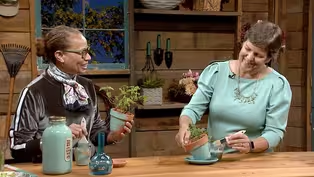
Clip: S22 Ep7 | 7m 32s | Enjoy these tips for fun family activities in the garden. (7m 32s)
VHG Clippings: Art in the Garden
Video has Closed Captions
Clip: S22 Ep7 | 26m 46s | Visit inspirational green spaces in Virginia. (26m 46s)
The Willcox Watershed Conservancy
Video has Closed Captions
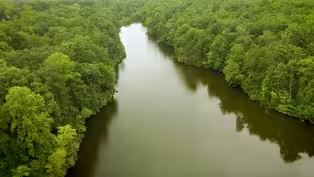
Clip: S22 Ep7 | 7m 24s | Visit a park created by women workers in the 1930s. (7m 24s)
Providing Support for PBS.org
Learn Moreabout PBS online sponsorship

- Home and How To

Hit the road in a classic car for a tour through Great Britain with two antiques experts.






Support for PBS provided by:
Virginia Home Grown is a local public television program presented by VPM